

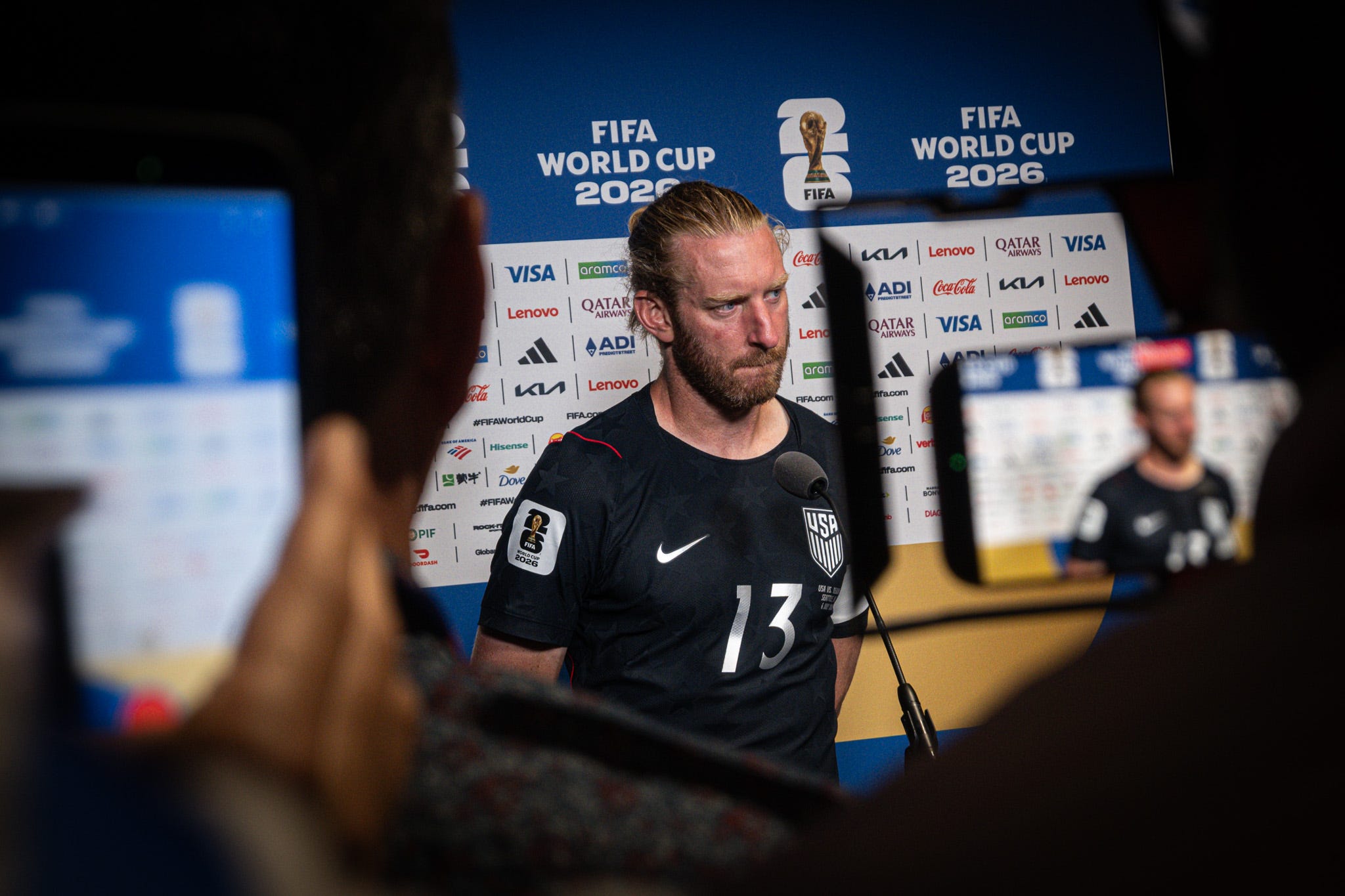
SEATTLE — After all the good that had come before — the 4-1 win over Paraguay, the shutout of Australia, the knockout triumph against Bosnia — Tim Ream still couldn’t say what any of it meant.
Not yet. Not minutes after Belgium reminded the United States how far there still is to go.
For a moment this summer, Folarin Balogun and Malik Tillman became household names. “Country Roads” swept across the United States. Americans packed football stadiums to watch everyone else’s football with a passion that seemed like it just might actually stick around this time.
Then came Monday night.
The U.S. played Belgium in the Round of 16, in the final match of this 2026 FIFA World Cup here in Seattle, in another packed stadium that featured flyovers by fighter jets, George Washington cosplayers, endless chants of “USA! USA!” and a general sense of optimism that doesn’t often befall this country in this sport.
And the Americans were completely outclassed by Belgium, 4-1.
After all of that — which doesn’t even begin to include the saga of Balogun, whose red card from last week’s win over Bosnia was controversially suspended by FIFA on Sunday, allowing him to start Monday — this team became another United States team to make it just far enough for the sport’s blue bloods to remind everyone how this usually goes.
Was this progress? It’s not something the 38-year-old captain could say.
“I would love to take a step back and give an opinion, but I can’t at this very second,” Ream said. “It’s just one of those that I probably won’t be able to personally think about for a few days until I really sit back and allow the emotions to subside and look at it from an analytics and technical scale.”
Technically, the Belgians steamrolled the Americans.
Their first goal? A rough start for the Americans in the ninth minute, but forgivable.
Their second goal? A solid kick in the rear, coming a minute after Tillman equalized in the 31st minute with a magnificent free kick.
Their third goal? A complete and embarrassing backbreaker.
Down 2-1 in the 57th minute, U.S. keeper Matt Freese attempted to clear a long pass intended for Belgium’s Charles De Ketelaere. Freese’s first touch came off his chest, but when he tried to kick the ball out of danger, his cleat caught the turf. As Freese’s foot created a divot, De Ketelaere poked the ball to Hans Vanaken, who fired toward the keeperless goal. As the last one back, Ream had an opportunity to block Vanaken’s shot, but whiffed.
By the time Belgium closed out the scoring with its fourth goal in second-half stoppage time, the thousands of American fans who had serenaded Team USA with “Country Roads” two weeks earlier in this same stadium were instead heading for the aisles to beat traffic.
Belgium created the better chances, outshot the U.S. 15-7 overall and put seven shots on goal to the Americans’ two, forcing the U.S. into a nervous, antsy style of play that stifled any opportunity for progression.
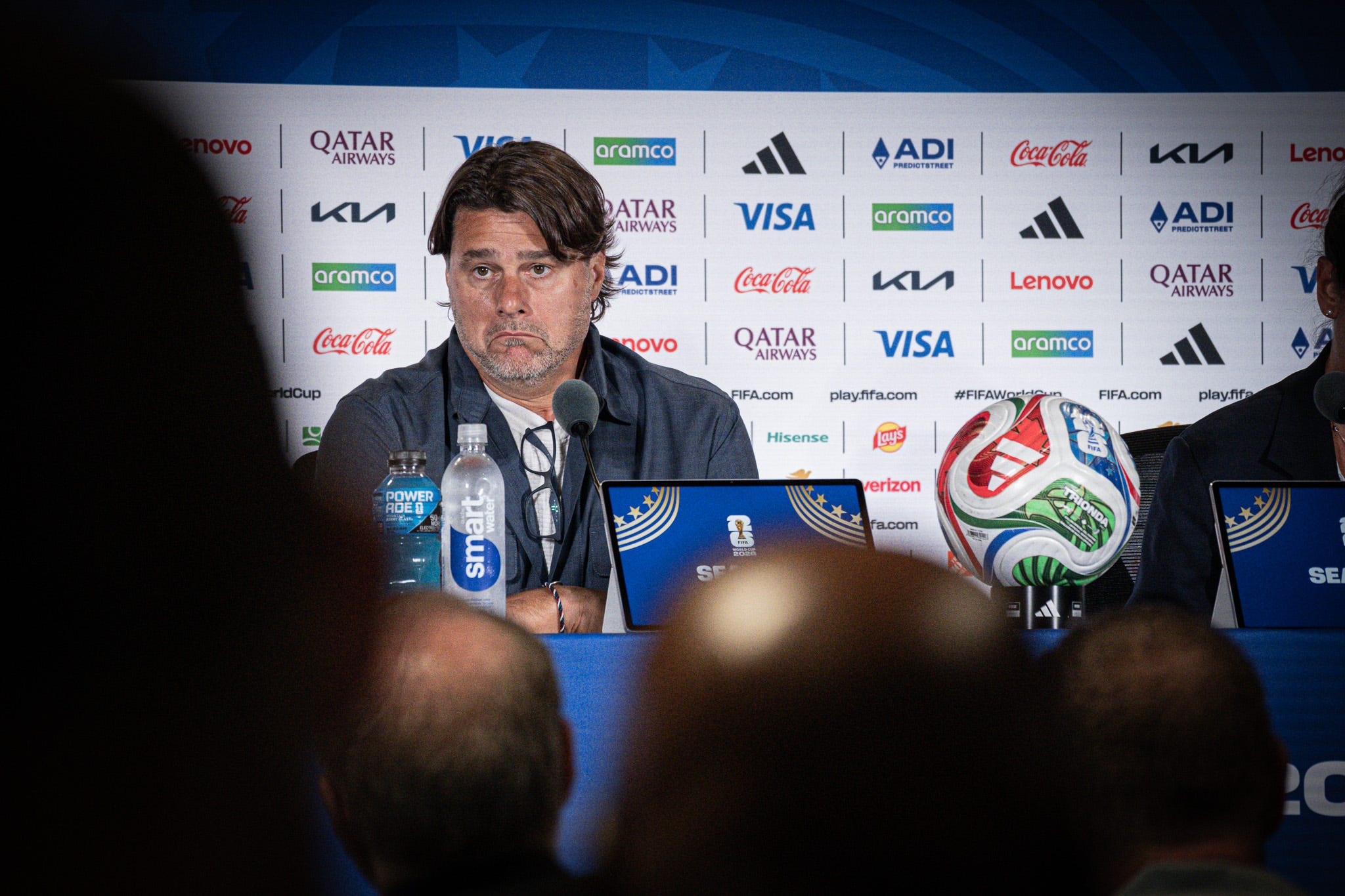
Aside from Tillman’s goal, the Americans’ best contact came on the foot of coach Mauricio Pochettino, who punted a set of Powerade bottles after Belgium’s second goal.
“We didn’t get into the game,” Pochettino said. “Even when we scored the goal at 1-1, we conceded in the next action. It was very tough. Congratulations to Belgium, they were better than us. It’s not to find excuses, we didn’t show what we normally showed. That is the reality.”
That the Americans were so listless on offense came as a surprise considering the run-up to the match, when the soccer world was focused on the status of Balogun. The U.S. forward had scored three goals in the tournament, but missed the final third of the win over Bosnia after his red-card ejection.
If the call itself was controversial, the story hit another level on Sunday when FIFA announced Balogun could play, followed by President Donald Trump posting on social media that he had personally called FIFA president Gianni Infantino in an attempt to overturn the call.
Belgian fans booed Balogun’s name during the starting lineups, then didn’t have to think much about him the rest of the way. He had one shot on net in the 83rd minute, the U.S.’s only attempt on goal other than Tillman’s free kick.
“Was anyone a major presence today?” USA midfielder Tyler Adams asked when questioned about whether the last 48 hours were a distraction for Balogun. “We had no idea about it. We were on the bus to training, one of you guys probably broke the news, and we read it just like you. How did it affect us? We were happy that we had the opportunity for him to play.”
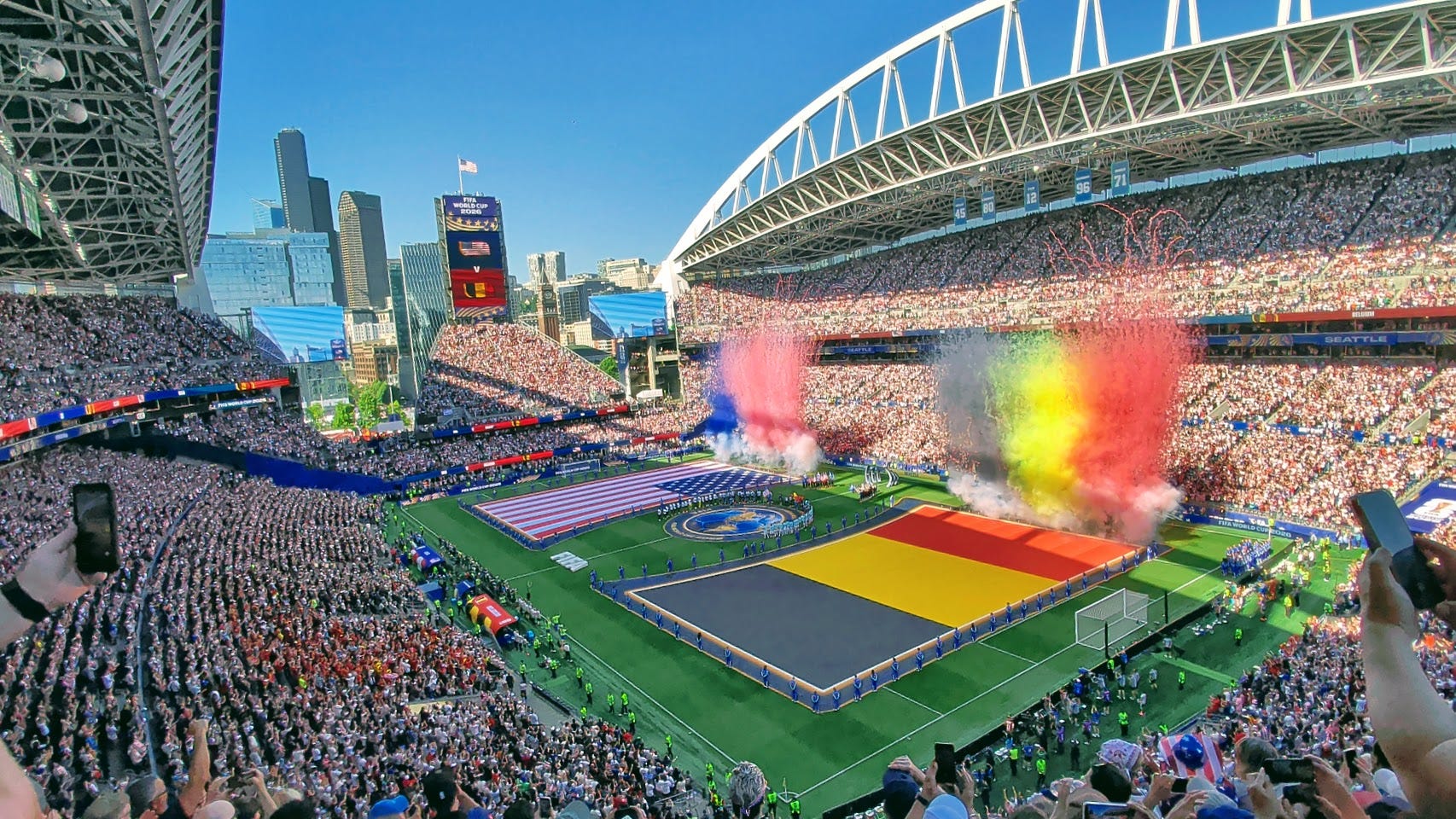
For much of the tournament, the same could be said about the fans who came out to see world-class soccer in the Northwest. Monday was the last of the six matches played in Seattle, a series that brought memorable moments from Iran’s 1-1 draw with Egypt, Belgium’s come-from-behind win over Senegal in the Round of 32 and that sunny Friday afternoon in mid-June, when the Americans capitalized on the momentum and positivity of their 4-1 opening win over Paraguay to thump Australia.
Soccer in America felt different that day. And nothing about Monday night technically changes the very real moments that happened over the last month. The Northwest, and this country, saw something change about soccer over the last month — even if the ending on the pitch for the Americans had the familiar taste of bitterness.
Progress, Pochettino said, isn’t linear.
“Getting knocked out of a tournament doesn’t feel great,” Adams said. “You start to think of what you could have done better. That’s the environment of elite performances. If no one ever lost, there probably wouldn’t have been any progress, and that’s for the best players in the world. You go through it, you put yourself in those situations and try and break through.
“At this moment, it sucks.”
— Tyson Alger, The I-5 Corridor