
An American football writer at the World Cup: Day 1 in Seattle

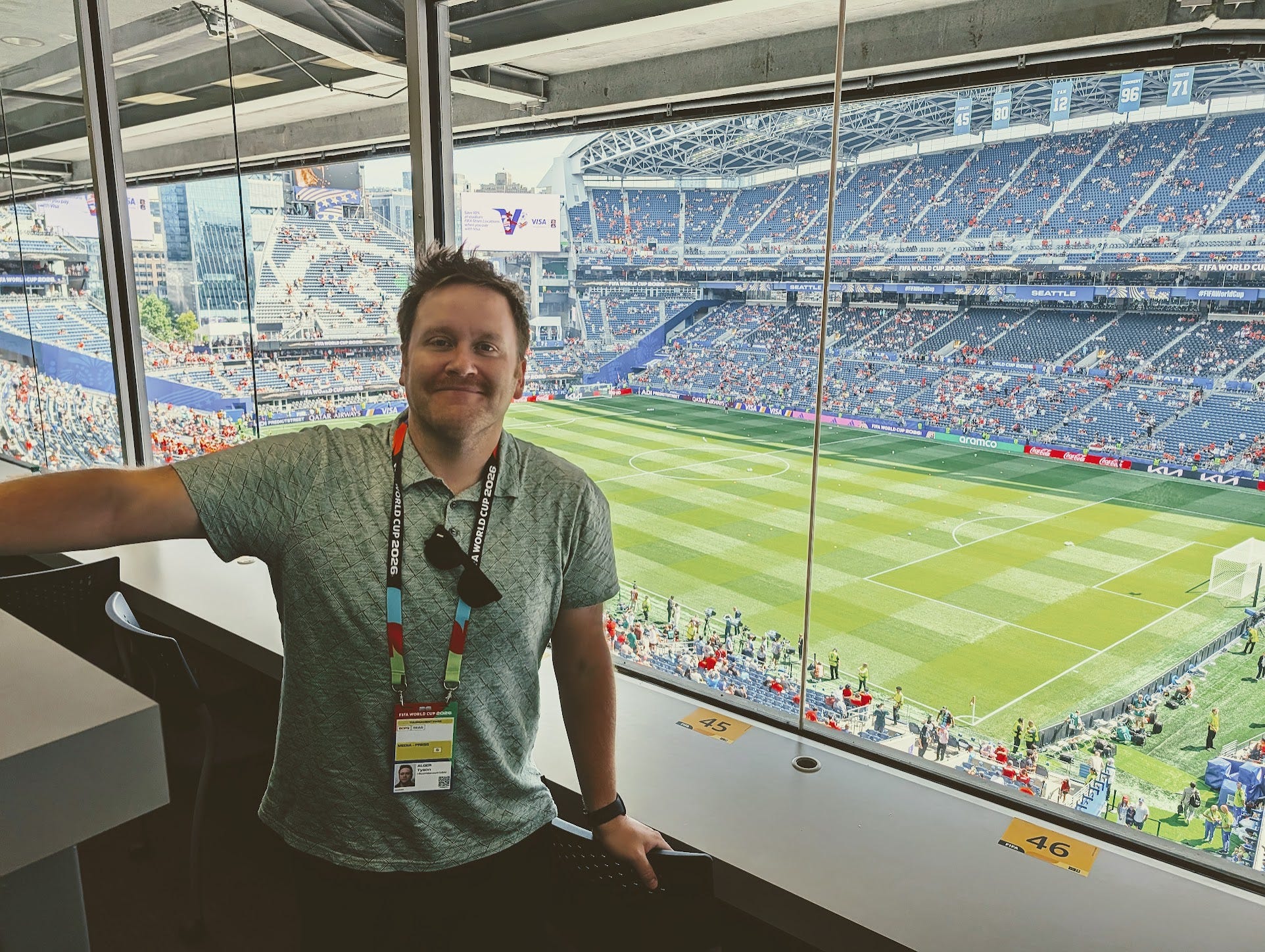
SEATTLE — Elbow room disappeared quickly inside the mixed zone.
Egypt and Belgium had just tied, 1-1, in the first World Cup match ever held in the city, and media members from around the globe flowed from Seattle Stadium’s press box down to ground level, through a hallway filled with signed Seahawks “12s” jerseys and into the neighboring event center, where players from both countries would soon filter through.
At first, I didn’t feel out of place.
I’ve been to what is normally known as Lumen Field multiple times for football games, covered a handful of Sounders matches here, and the way the athletes who aren’t chosen for the main press conference are paraded through the mixed media zone isn’t unlike the experience of covering track.
I’m an American football writer by profession. In November, I’ll be in Columbus covering the Ducks vs. Buckeyes in a stadium holding roughly 40,000 more people than the 66,775 who were here Monday.
What’s a little World Cup, right?
Fortunately, I know better.
While my Oregon Ducks coverage at Lookout Eugene-Springfield is award-winning, I’ve only really been following soccer for the last three years. I started writing about it to fill a void in Portland Timbers coverage in 2023, had a meltdown the first time I had to write a gamer off a scoreless draw and have had more than my share of embarrassing moments while trying to learn a sport and league on the fly.
I’ve read books, started digging into analytics, been in the same building as Messi and slowly become the person recommending the Netflix documentary about the 2010 French World Cup debacle to friends, despite its subtitles. I’ve even started guffawing at American sports fans who can’t handle soccer’s flopping.
I can’t pretend like I didn’t see this in person:
But there is still so much I don’t understand about the game. My writing has leaned heavily on storyline and heart — granted, my Ducks readers will never confuse me for a tactical genius when it comes to our football, either.
And so I started to feel out of place in the increasingly crowded interview area as we waited for players.
I wasn’t writing a gamer — I’m saving that for Friday, when the Americans take on Australia in a game pitting Group D’s undefeated teams against each other — and my chances of understanding what was happening took a hit when a FIFA official said there would be no translators on hand.
There were no identifying placards. Players wore no numbers.
“Who is this?” I asked a reporter next to me as the first Egyptian came through the scrum.
I heard: “Mo Salah.”
That was weird, because the Mo Salah I knew had a beard.
The man in front of the cameras, of similar stature, was freshly shaven.
Hey, it wouldn’t be the first locker-room shave. Plus, I’m the rookie here.
So for about five minutes, I ignored my red flags and believed I was listening to Mo Salah, the two-time Premier League Player of the Year with Liverpool, who received cheers from the Egyptian fans every time he touched the ball Monday, and who now said that, despite hundreds of hours of interviews on YouTube to prove the contrary, he didn’t speak English and would only take questions in Arabic.
As it turns out, Mo Salah does speak English.
Tarek Alaa does not.
Nor did the 23-year-old defender play.
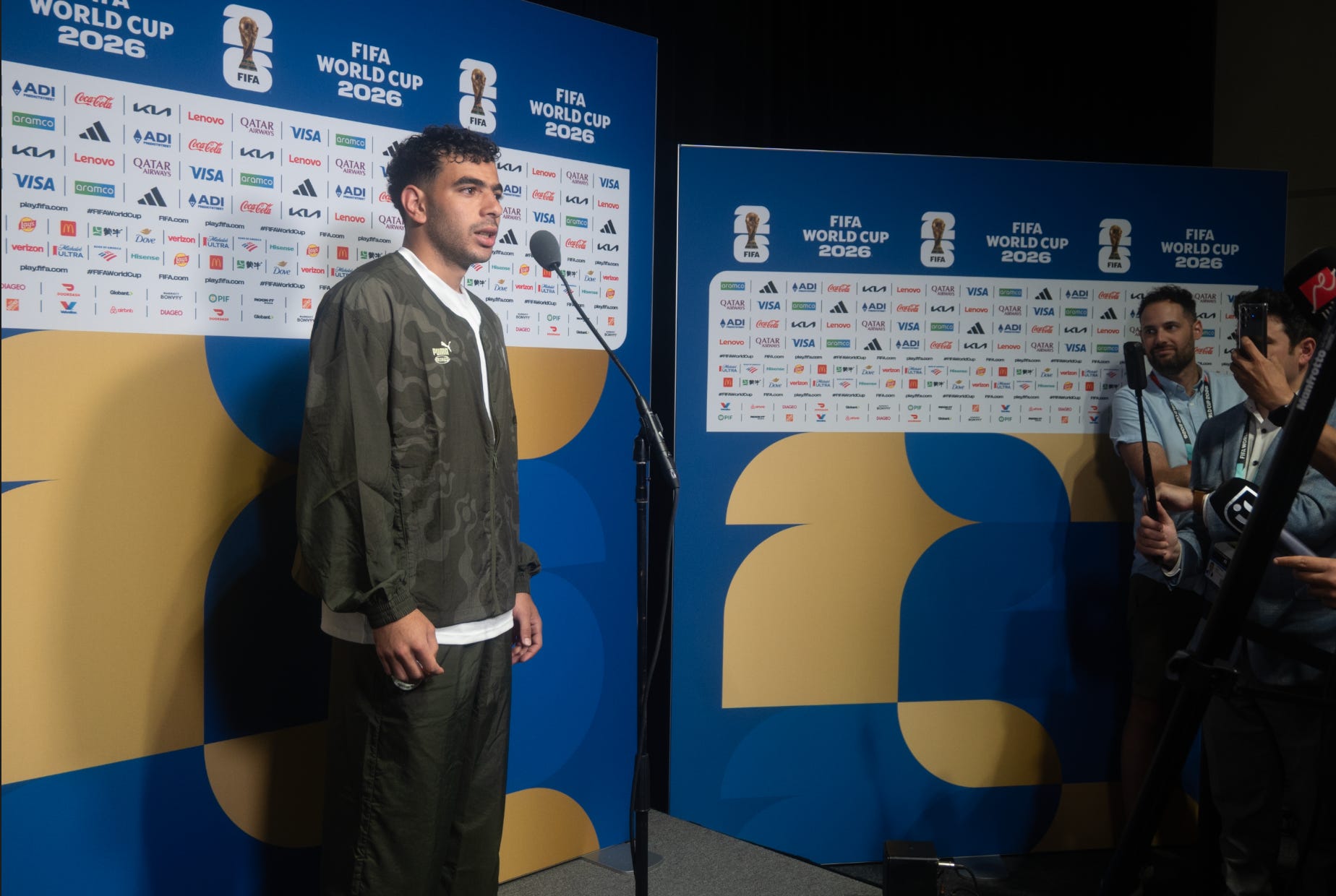
But Monday was his first time at the World Cup, and through the marvels of modern technology, I’d later learn that Alaa soaked it all in: from Salah’s pregame speech to the roaring crowd to the slight disappointment in Egypt’s locker room after falling just short of upsetting the ninth-ranked team in the world.
There’s still room to improve, he said.
“We came over to fulfill a dream,” Alaa said. “We didn’t just come to put on a good performance. We want to achieve something.”
I do, too.
More than a decade into my career covering American football, I still get anxiety about making sure everything I write about a game is correct. You have to be careful, right? These players are famous. Fans care about them. Shoot, Oregon quarterback Dante Moore has nearly 150,000 followers on Instagram. Screw something up and there could be some blowback.
But among the many things I learned Monday, 65 million people follow Salah — and more than a million of them had liked a post from Monday showing Salah, with a beard, playing in his first World Cup in eight years.
It was his birthday.
I didn’t know.
I do now.
And while I’m still figuring out what exactly my coverage is going to look like over the next two weeks as I head back up to Seattle on Friday and then Vancouver on Sunday, my goal is simple: Be prepared. Be curious. Learn.
Here’s a log of my observations and lessons learned from Day 1 at the Cup.
The World Cup Day 1 Diary
8:45 a.m. — That wasn’t so hard
A massive event bringing in people from around the world kicking off in the middle of a Monday?
Yeah, like I was going to try that traffic.
Instead, the trek from Portland was made on Sunday night. After a solid night of rest and breakfast with my nephews, I headed from Capitol Hill down to FIFA’s credentialing offices in Pioneer Square. I expected a line. There wasn’t. Within 10 minutes, I was back in my car, credential in hand, and heading to the stadium.
9:15 a.m. — Go, Mariners?
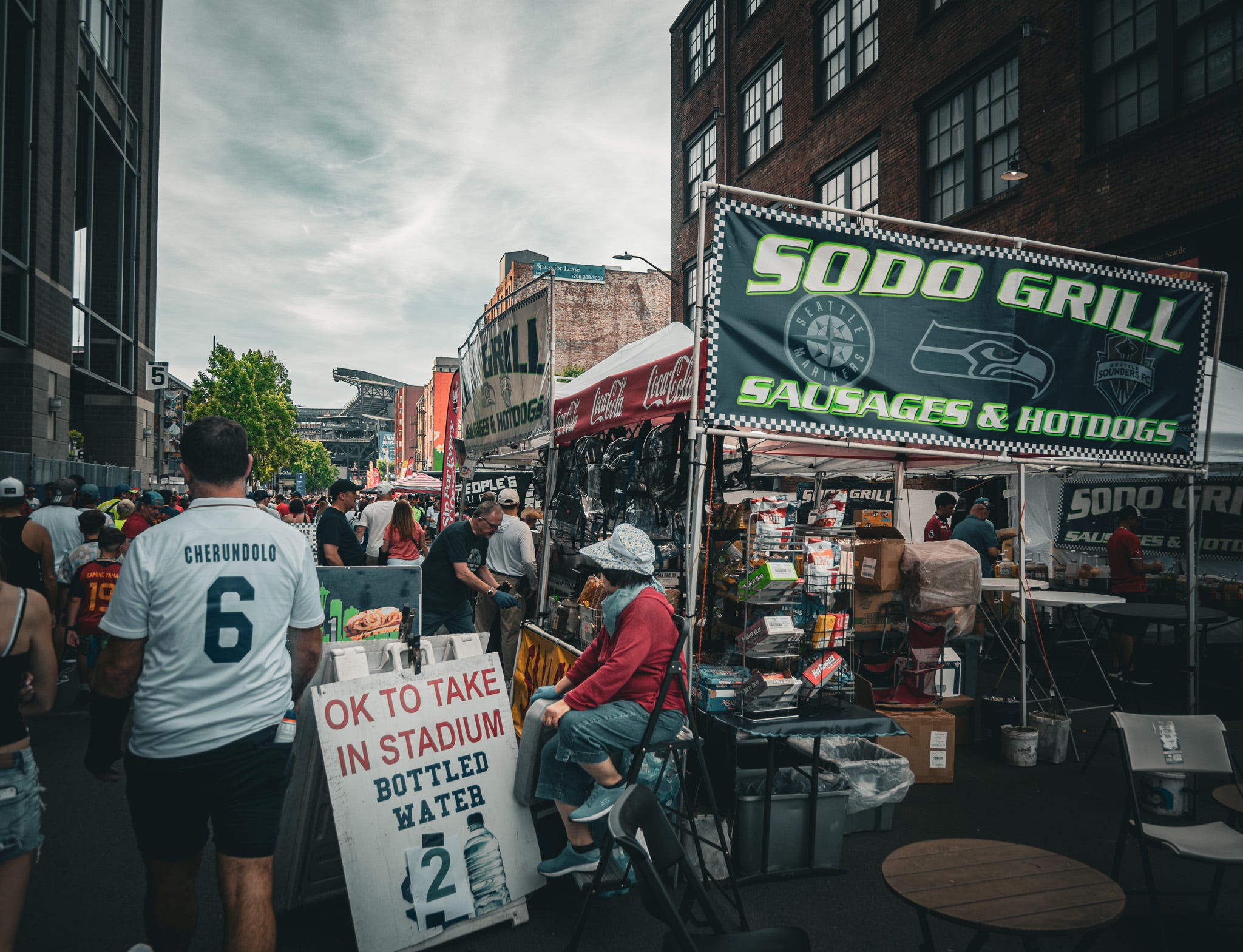
The Seattle Mariners fueled my interest in sports as a kid. That led to sports writing, which led to soccer, which led to the World Cup, where I’m now parking in the Seattle Mariners media garage.
The writer in me likes that symmetry.
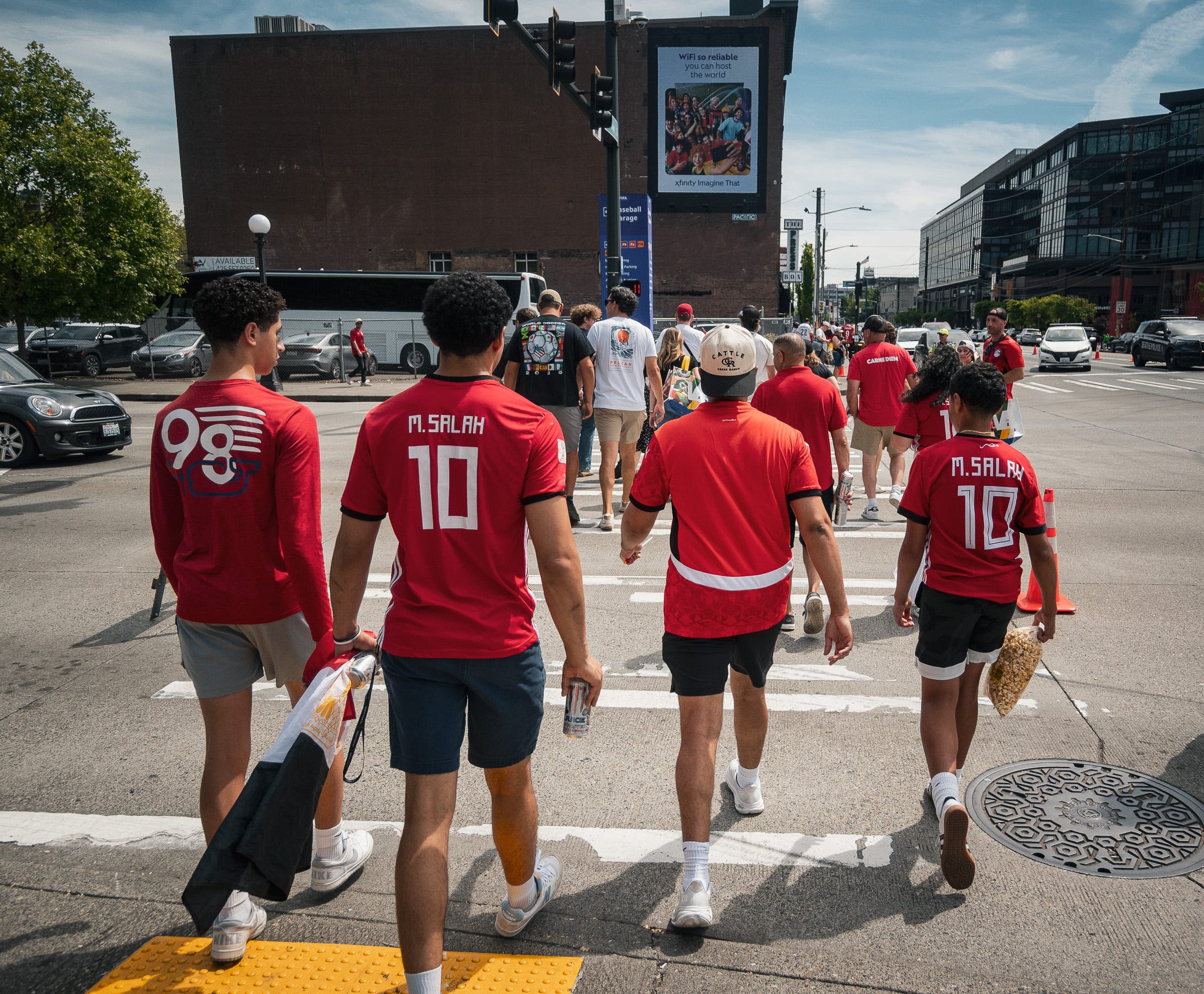
Granted, the scene outside is a bit different from your typical Mariners game. It’s jarring at first — the sheer diversity is unlike any sporting event I’ve been to. There are Belgians with painted faces and Egyptians dressed as pharaohs waiting in line together for Seattle Dogs. It’s crowded, yes, but the temperature is still cool and the vibes are high.
“Here’s hoping it’s this way on Friday,” the security woman says as she checks me through and sends me on my way to the press box.
10:30 a.m. — Not the only fish out of water
The Athletic is in front of me. The Seattle Times is to the left. And I’m sitting in the third row as I come to find my seatmate is Ari Liljenwall, who came on The I-5 Corridor’s Traffic Report podcast five years ago to explain a sport I knew little about.
Small world, right?
It feels even smaller when the Belgian, Egyptian and American media members huddle under the room’s TVs to watch the final minutes of Spain’s shocking tie — not a phrase I would have imagined using four years ago — with …
“Cape Verde?” someone says. “Literally never heard of it until today.”
11:18 a.m. — Going with the flow
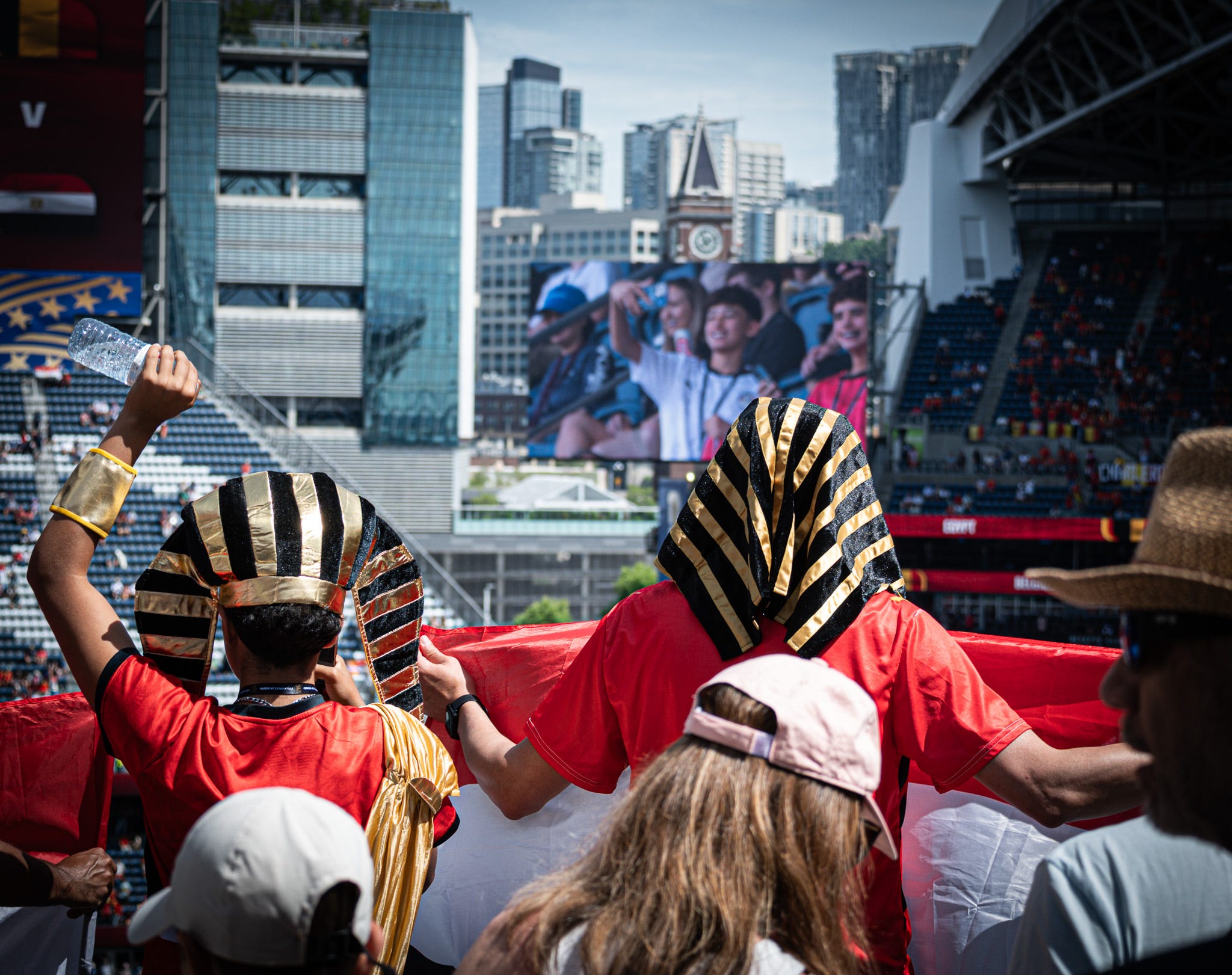
The U.S. national anthem just played before both teams took the pitch for warm-ups. A walk around the stadium’s upper concourse sees manageable concession lines, but bottlenecks in the stadium’s narrower concourses.
They drive on the right side of the highway in Belgium and Egypt, but what happens if we get a righty versus a lefty?
11:50 a.m. — “From Cairoooooo”
I was curious about the feel of this World Cup being played in cavernous American football stadiums. When I was a young boy growing up dreaming about covering my first Cup — just go with me here — I didn’t exactly have visions of it happening at the same place as the Beastquake.
But the stands are packed now. The grass field installed for the pitch is immaculate, and the pregame ceremony induces goosebumps as two massive flags from each country unfurl.
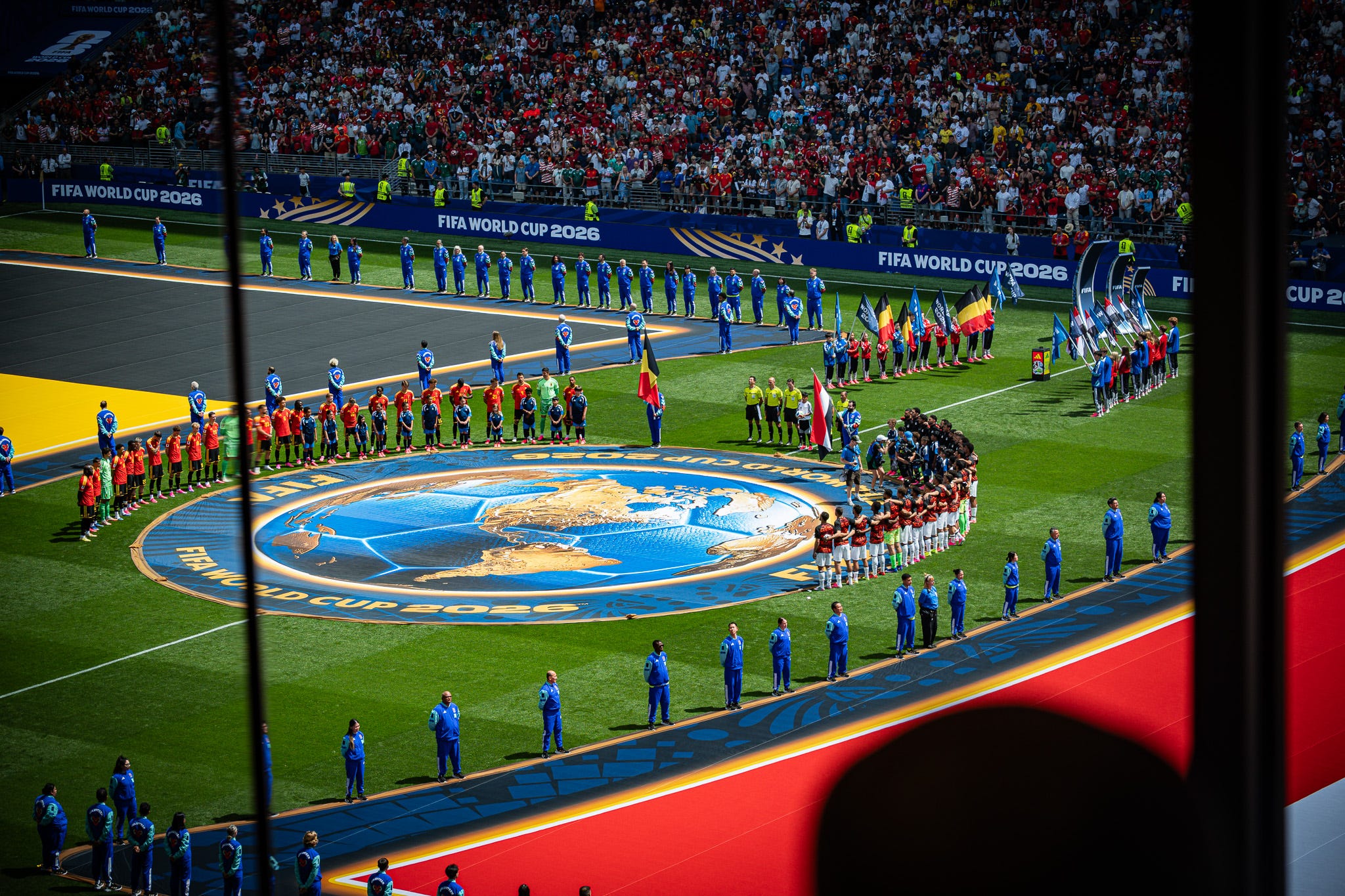
This truly is an international event.
This is also America, I’m reminded, as “Sirius,” the player entrance theme song for the Michael Jordan-era Chicago Bulls, plays as lineups are announced.
12:20 p.m. — Plenty of cheering in the press box
From the start, it’s clear this is the best soccer I’ve ever seen. There are great individuals in MLS. But everything here is assertive, physical and, my goodness, it’s nice to see passes hit their targets in stride.
Egypt plays the aggressor early and strikes first when Emam Ashour rips a low shot from outside the box inside the near post. The crowd erupts — and so, too, does a third of the press box.
At American sporting events, this would generally prompt a reminder from officials that “there’s no cheering in the press box.” No such thing here, and I see a mixture of bewilderment, annoyance and maybe even a hint of jealousy from the Americans in the middle.
12:23 p.m. — The hydration break
Soccer purists despise the “hydration break” installed at this year’s World Cup, which is said to be for safety but also comes with the added benefit of two commercial breaks for FIFA.
It’s 82 degrees and overcast as today’s match reaches its first break. It’s supposed to be 76 degrees at kickoff on Friday.
Hey, at least Phil Neville approves.

12:40 p.m. — Cal Raleigh’s World
Both countries’ flags include red and black, which contrasts the teal of the occasional Mariners jersey in the crowd.
Salah is big here.
So, too, is the Dumper.
12:50 p.m. — Where everyone knows your name
The World Cup: Where you can see some of the most famous people in the world … and your mortgage guy.
At halftime, I noticed my buddy Brian Tovey was posting Instagram stories from seats just below the press box.
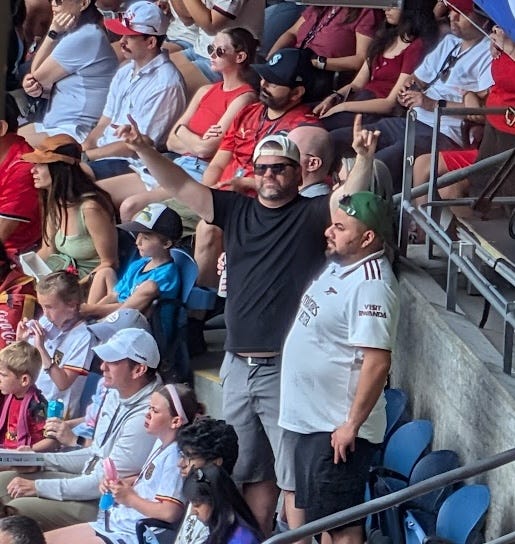
His review?
“We had a blast. Getting in was a madhouse. Once in, it was the expected $20 beers and long restroom lines. Everyone was pleasant. We saw no skirmishes.”
Put that on a greeting card.
1:26 p.m. — Tie game
Belgium just equalized. Team legend Romelu Lukaku, who started the match on the bench as he works his way into shape, subbed on in the 66th minute and forced an own goal 22 seconds later to bring this thing to a draw.
The Egyptian media groan. Two succinct claps ring out from the Belgians. It’s game on — closely followed by another hydration break.
1:38 p.m. — Salah comes off
Salah comes off to applause in the 76th minute, taking off his captain’s band as he leaves the pitch. I make note and wonder if he’ll be available for media later.
3 p.m. — Nobody wants to leave
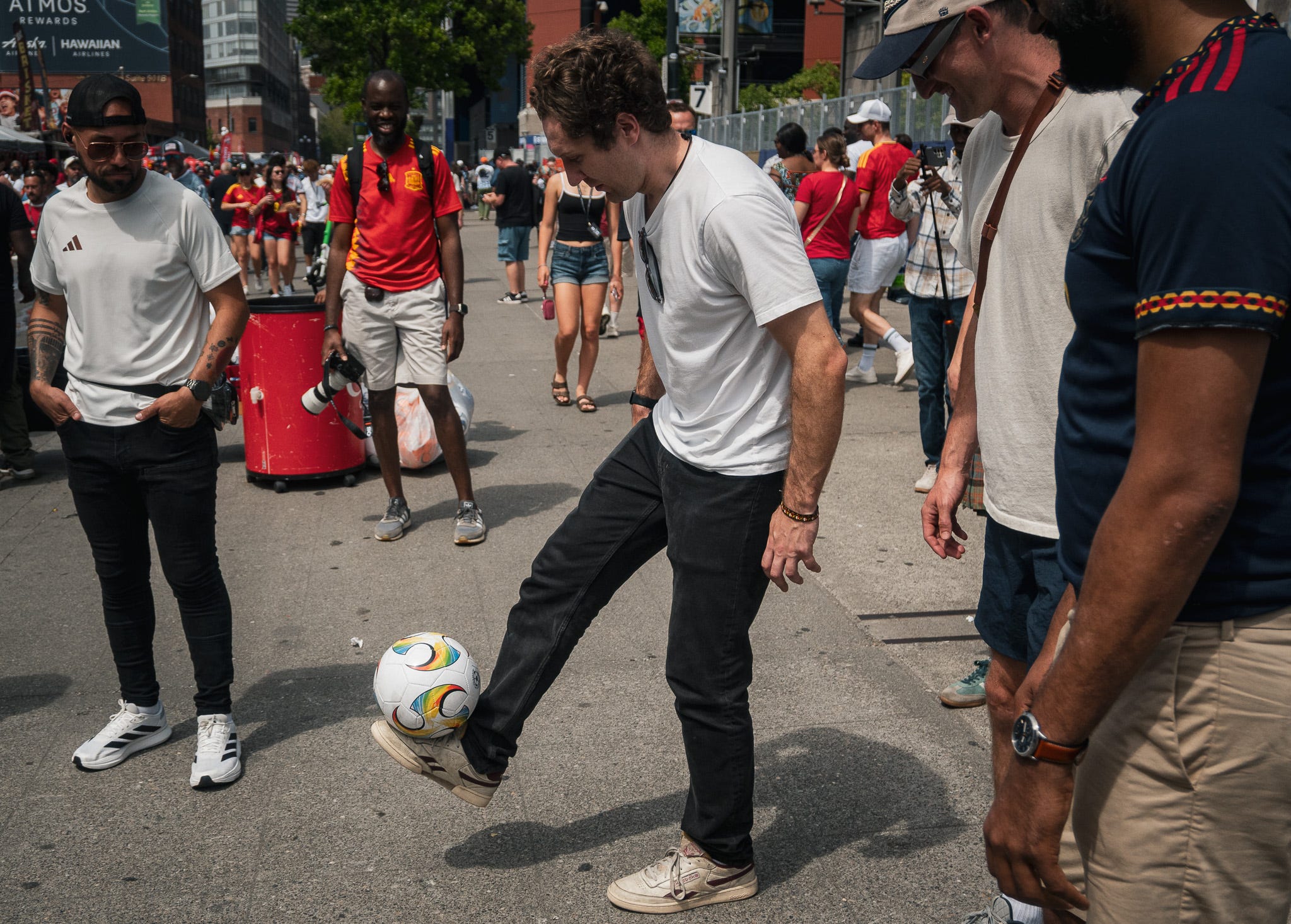
The game ended in a 1-1 draw more than an hour ago, interviews are over and Occidental Avenue is still pulsing with energy.
As I make my way back to the parking garage, I stop to take photos of a circle of fans juggling a soccer ball. There are Americans, Egyptians, Belgians and two kids laughing in the circle as they keep the ball afloat.
I pray it doesn’t come my way and blow my cover.
6 p.m. — Home sweet home
To be clear, I’ve learned a fair amount about soccer before today. I’ve learned that an exciting draw does exist, that pinpoint crosses are some of the most technically challenging feats of athleticism, that most club team assistant coaches speak six languages better than I do one and that college sports should take a long, hard look at the response when the world’s top soccer clubs tried to form their own super league.
It’s a massive and complicated sport with millions of entry points, which can be overwhelming for someone in his 30s who grew up familiar with home runs and alley-oops and Hail Marys, yet foreign to bangers, gaffers and a clock that ticks up instead of down.
But what I’ve learned is that if you’re lucky enough to be caught by the game, if you allow it to grab hold of your attention long enough to sink in, there’s so much to love.
I thought that before Monday.
But now, sitting on my own couch in a quiet house six hours after being at the World Freaking Cup, I know it.
I can’t wait for Friday.
— Tyson Alger
This is a lovely piece, Tyson.
Welcome to the club.